
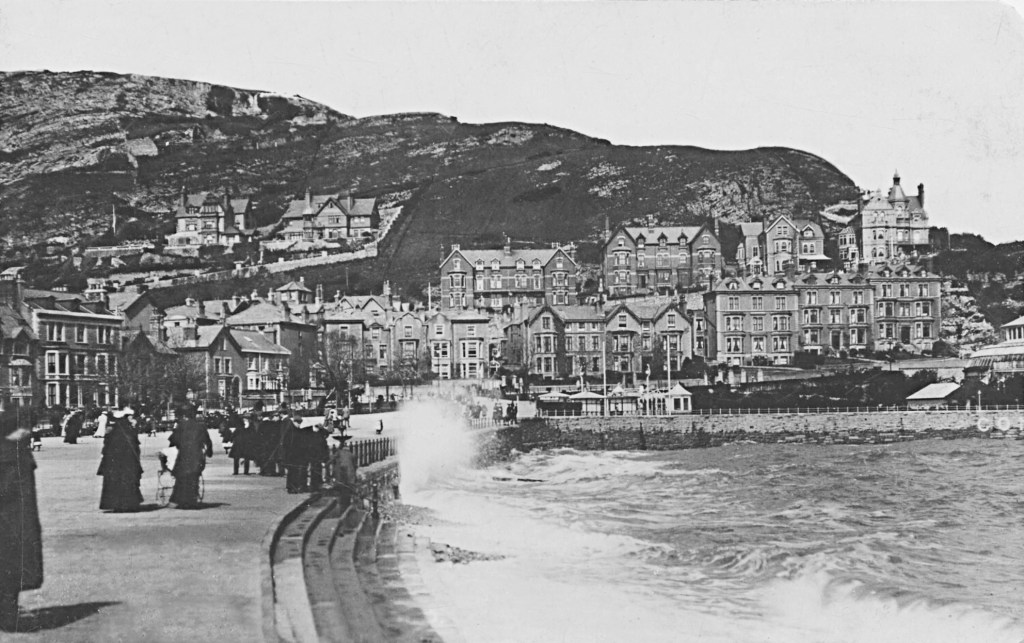
Nestled in the heart of Llandudno, Min y Don is not just a welcoming guest house by the sea; it’s a piece of local history. From housing a significant waterwheel in the 19th century to providing a home for a notable figure in Welsh history, Min y Don’s walls have witnessed centuries of change and growth in this charming coastal town. Join us as we delve into the fascinating past of this iconic property.
The Early Days: Housing the Copper Mine Waterwheel
The origins of Min y Don trace back to a time when Llandudno was just beginning to develop as a popular seaside resort. In 1841, one of the property’s most intriguing features was introduced—the 15-foot waterwheel. This wheel was used for the copper mine operations nearby, which were part of a thriving industry on the Great Orme. The wheel stood as a symbol of the town’s industrial past, harnessing the power of water to help extract copper from deep within the Orme. The presence of this impressive structure within the property’s boundaries made Min y Don a significant site, offering a tangible connection to the area’s mining heritage.
A Home for Syr Clement Le Neve Foster
In the early 20th century, Min y Don became the residence of Syr Clement Le Neve Foster, a distinguished figure tasked with improving mining safety in the region. Foster, an engineer and a prominent advocate for safer working conditions, played a crucial role in investigating and enhancing safety practices in the mining industry, particularly in North Wales and Isle of Man. While not directly involved in the development of Llandudno as a seaside resort, his work in the area had a lasting impact on the mining community.
During his time at Min y Don, Foster’s expertise in industrial safety helped shape policies that contributed to better working conditions for miners across the region. His legacy is a testament to the significant advances in safety measures that helped protect countless workers, making Min y Don an important historical landmark in the context of Llandudno’s industrial past.
The Interwar Period: New Buildings and Expanding Horizons
As Llandudno’s popularity grew between the two World Wars, so did its landscape. Min y Don, already a cherished residence, saw the addition of two new stories. These extensions were part of a broader trend where existing buildings were expanded or renovated to accommodate the influx of visitors coming to enjoy the beauty of the North Wales coastline.
The 1920s and 1930s saw significant changes in Llandudno, with many of its grander houses and hotels being modified to suit the needs of a growing tourist trade. The addition of these stories to Min y Don is a testament to its importance in Llandudno’s development during this time. Not only did the property offer increased space for its owners and guests, but it also stood as a symbol of the town’s continued evolution.
One of Llandudno’s First Properties
Min y Don holds another special place in Llandudno’s history—it was one of the first properties to be built in this now-popular seaside town. While the town’s development as a Victorian resort took off in the late 1800s, Min y Don was one of the pioneering buildings in the area, establishing a foundation for the charming streets and buildings we see today. The early construction of Min y Don paved the way for future development, and its location near the promenade made it an ideal spot for both residential and commercial use.
A Living Piece of History
Today, Min y Don is much more than just a place to stay—it’s a living piece of Llandudno’s history. With its rich connections to local industry, influential figures, and the growth of the town itself, the property remains a testament to the resilience and charm of Llandudno. As custodians of Min y Don since 2018, we are proud to continue its legacy of hospitality, offering our guests a place to relax, reflect, and experience a piece of this historic seaside town.
Join Us in the Story of Min y Don
If you’re intrigued by the rich history of Min y Don, Llandudno, and the surrounding area, we invite you to visit us. Whether you’re interested in the historic copper mines, the grandeur of Llandudno’s early architecture, or simply the peaceful seaside atmosphere, there’s much to discover. Step inside Min y Don, and become part of its ongoing story.
📚 Sources of Information
1. The National Archives
- Website: www.nationalarchives.gov.uk
- Contains records on mining reforms, including safety investigations in the 19th and early 20th centuries. Syr Clement Le Neve Foster’s role in investigating and improving mining conditions can be traced through these documents.
2. Mining History Resources
- Website: www.mining-history.org
- Offers detailed historical accounts of the mining industry, including safety measures introduced by engineers like Foster. It provides insight into mining practices in North Wales and Foster’s contributions to enhancing worker safety.
3. The Royal Commission on Mines
- This commission, created to investigate mining practices and safety, often includes references to figures like Foster who contributed to safety reforms.
- Source: “The History of British Coal Industry” and related historical texts on British mining history.
4. The History of Llandudno
- Book: “A History of Llandudno” by R. L. Jones
- Provides a comprehensive look at Llandudno’s evolution, with references to notable figures like Syr Clement Le Neve Foster, and explores the town’s industrial past, including the copper mines and related safety reforms.
5. Great Orme Mines Official Website
- Website: www.greatormemines.info
- Offers historical insights into the copper mines on the Great Orme, where the 15-foot waterwheel was once housed. This resource links the property’s significance to the wider mining activities in the region.
6. Coflein (RCAHMW) – National Monuments Record of Wales
- Website: www.coflein.gov.uk
- A national database that records archaeological and historical sites, including Min y Don and its role in local industrial history.
7. Conwy County Borough Council – History of Llandudno
- Website: http://www.conwy.gov.uk
- Offers detailed historical and current information on Llandudno’s development, including the area’s mining heritage and its connection to key figures like Foster.
8. Llandudno Museum & Gallery
- Website: www.llandudnomuseum.co.uk
- Local museum with exhibitions and archives on the town’s industrial history, including the role of prominent figures like Foster and the evolution of Llandudno as a mining and later tourist hub.
 Seaside Stories: Life at Min y Don, Llandudno and Beyond
Leave a comment